Projects
Projects

I design end-to-end product experiences and the UX systems that sustain them — from early foundations through growth, optimization, and scalability.
Celigo was a Series A SaaS startup, and I was the first product designer. The platform’s success depended on enabling customers to build and maintain complex data integrations independently, without relying on professional services. Its current Gartner position was Niche, though it would move to Leader.
Flow creation was the core of the product’s value, but it relied on a series of complex forms to connect data. The flow builder itself was in alpha state, but needed to become the core way users built and evolved flows.
There was no onboarding, no in-product help or help center, release emails, engagement campaigns, and no community.
When users first interact with your product—through sign-up, sign-in, or recovery—they’re forming immediate trust judgments. At Celigo, these foundational experiences were broken: confusing branding, inconsistent emails, inaccessible UIs, and delayed activation caused drop-off before users even reached the product.
This initiative rebuilt those first-touch moments and extended them into onboarding tours and callouts, reducing friction from account creation to value realization.
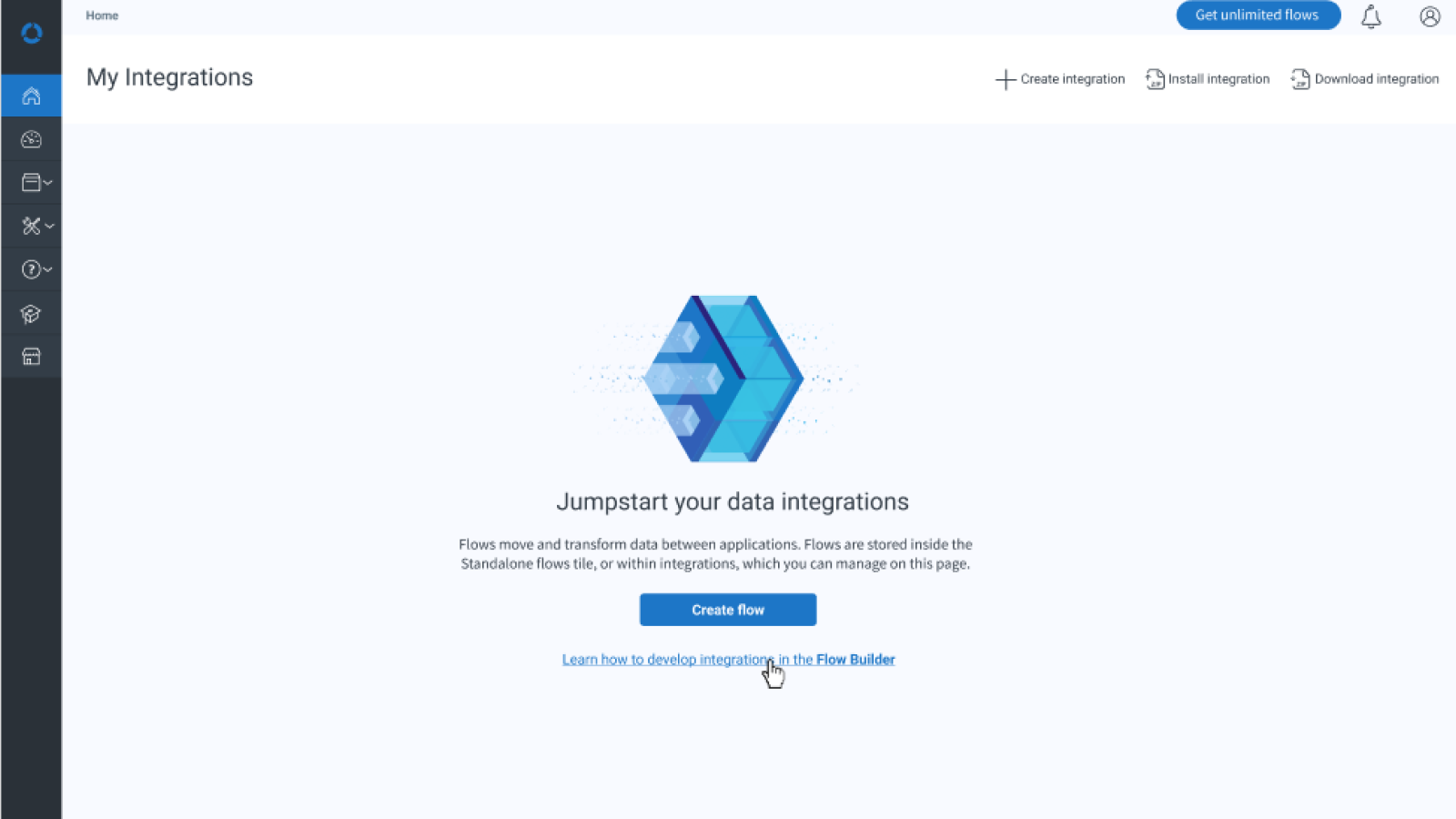
Old state: No branding, confusing navigation, no password visibility, and no timely activation emails.

New state:

Forgot password: Add ability for users to reset their passwords.

Invite new users

Invite users: Adding the ability to invite users for the first time.
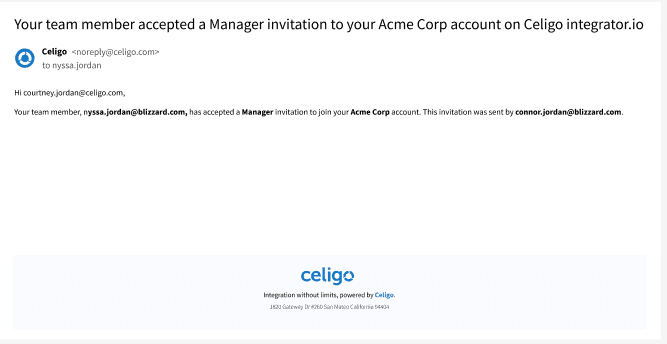
Invite users: Administrators always know which users have accepted
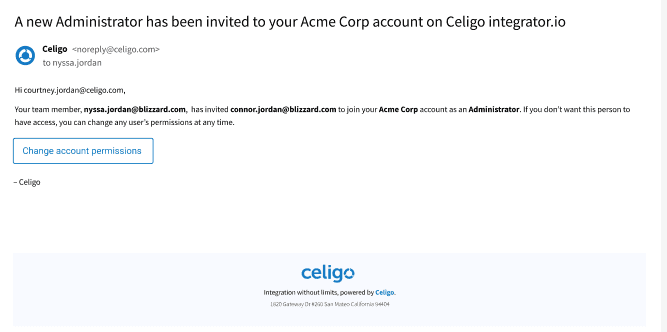
Invite users: Administrators always know when there's a new administrator, and can immediately react if there's a potential breach.
Old state: High learning curve; users unsure where to start.
New state:

Flow empty state: Creating a flow is the most important task to ensure user stickiness. The more flows they create, the more likely they will convert to paid from a free account.

Connection empty state: Adding their first connection was critical to getting data flowing, increasing stickiness.

Import empty state: Setting up an import was the first step in creating a flow
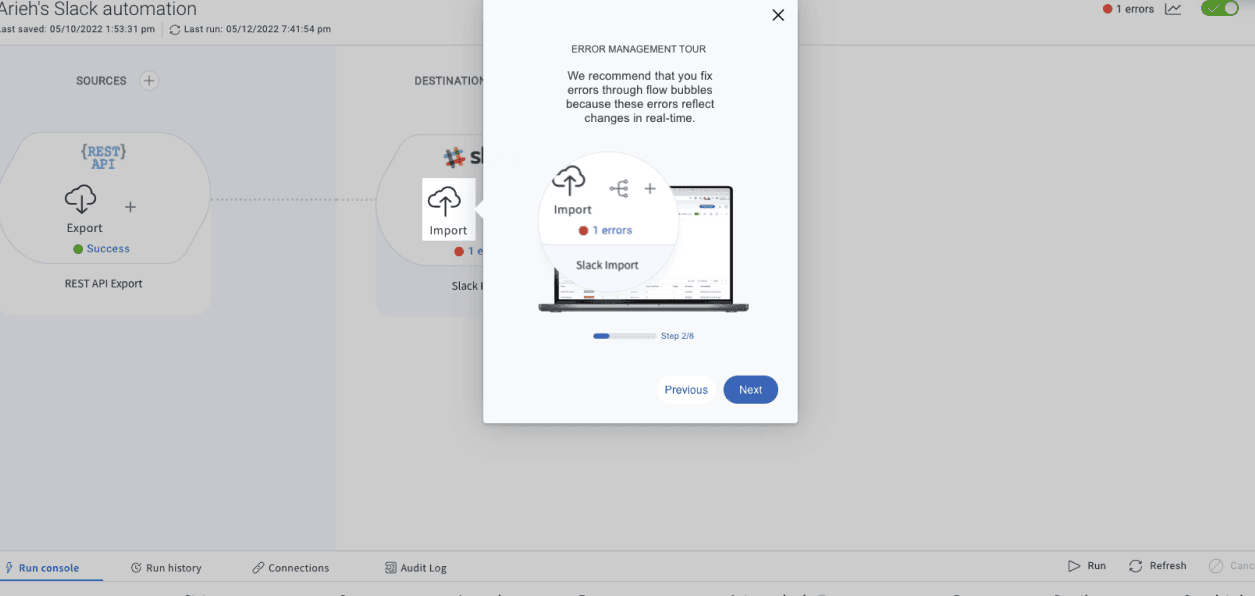
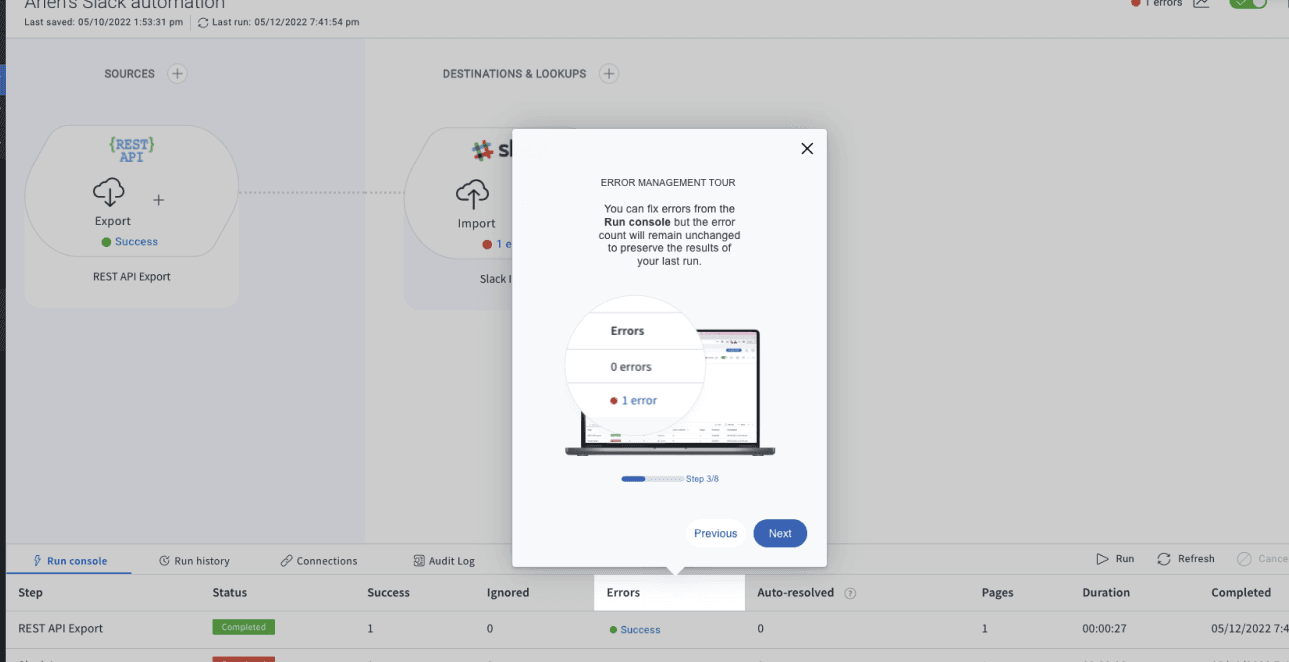
As a data integration (iPaaS) platform, people needed to be able to create and troubleshoot flows quickly. We did a number of things to optimize error resolution, including this onboarding.

Error recovery: Getting people unstuck was critical to stickiness.
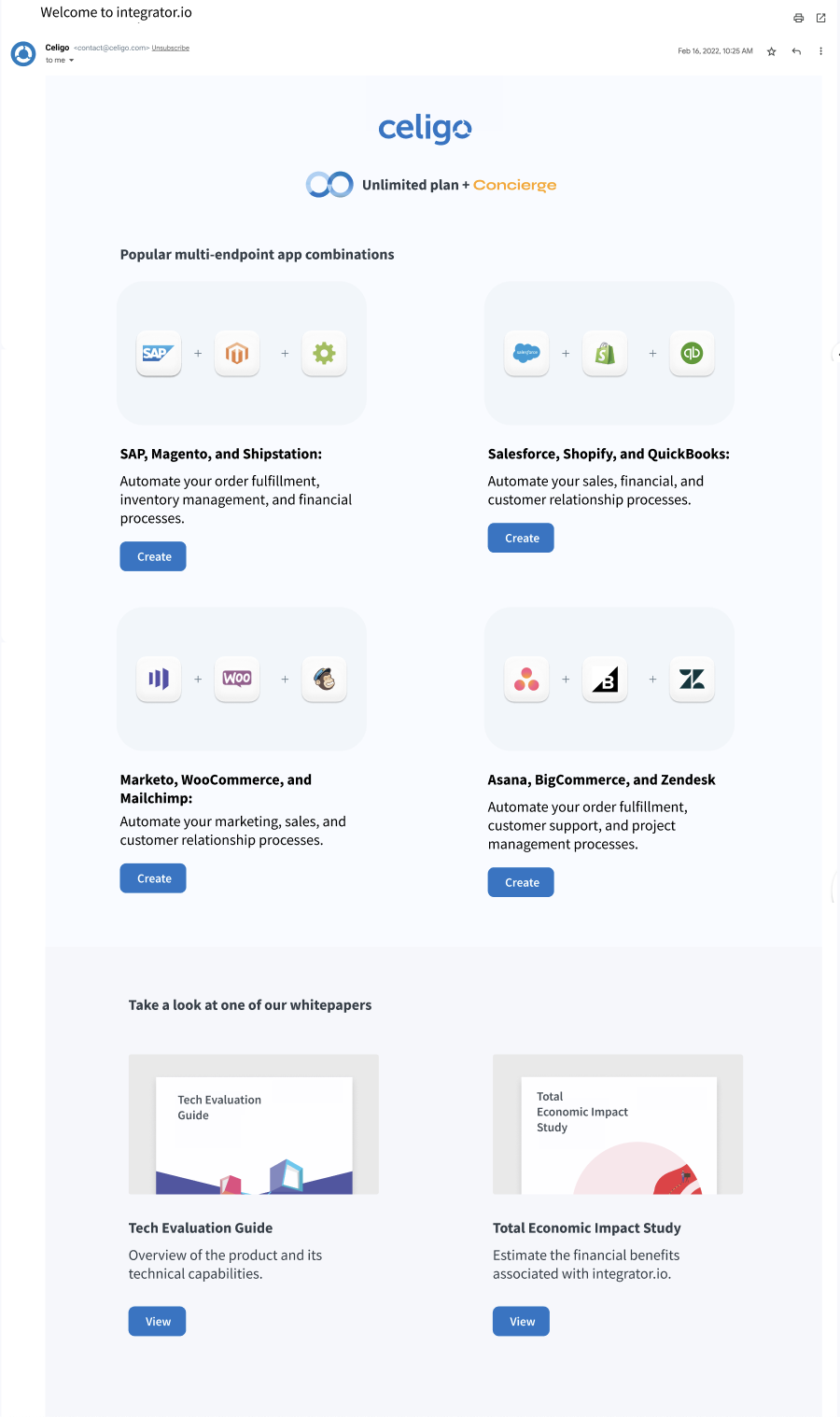
To get users to value quickly and drive adoption and retention, I created a cross-departmental growth team that worked together to create email campaigns to help users create their first flow, which became the company North Star. A series of emails kept users engaged throughout their first 7 days of a trial, which is what our analytics showed was the most critical time for conversion.

This email highlighted the benefits of converting to a paid account, from unlimited flows to a dedicated tech to premier support.

This example provided popular flow combinations, as well as surfacing relevant whitepapers.
This example surfaces the Celigo University, which I helped to create the content and assessments for.

