Projects
Projects

I design end-to-end product experiences and the UX systems that sustain them — from early foundations through growth, optimization, and scalability.

Axway’s web presence was split across disconnected properties with inconsistent branding, navigation, and user flows. Each product and regional site operated independently, confusing users and fragmenting engagement. The company needed a single, cohesive experience with unified navigation, shared analytics, and consistent performance.
I drove the concept and stakeholder alignment, shifting the organization’s mindset from isolated portals to a single user-centric web ecosystem.
I storyboarded the main use cases for our personas: search from Google, search from corporate homepage, search from docs, and search from support.

Aligning stakeholder through stories: A good cartoon brings everyone together!
The new customer portal provides a clear call-to-action to get users to sign up, bringing forth the value of what they get when they do. This introduced a global and site-level navigation. Note: Red is a branding color, which is why it was used for navigation, despite it ideally being reserved only for errors!

This portal brought together the various touchpoints across the Axway ecosystem. Users can get to any other part of the Axway web ecosystem via the top navigation. The secondary navigation enables them to navigate only within the selected area, in this case, Support.

New customer portal put everything at the user's fingertips, from support to docs to events and training. This was an earlier wireframe version of what became the portal above.
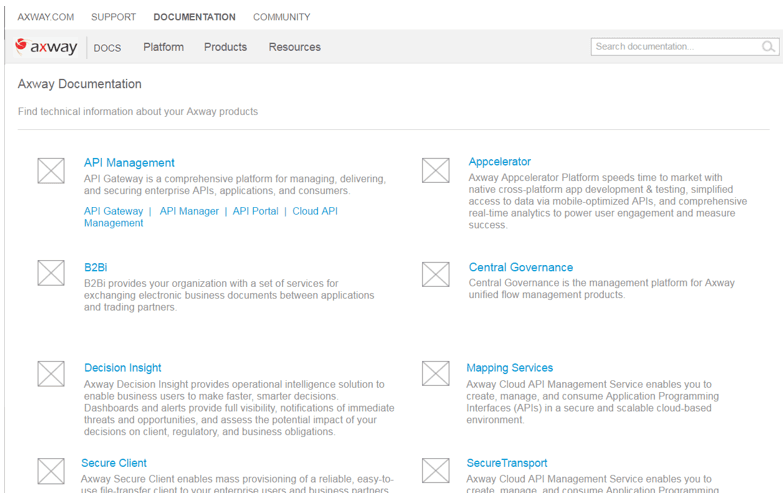
Always know where you are: Users can quickly find the relevant information they need for any product, while still being able to access other parts of the web ecosystem.
Boldly going where no Axway product or website had gone before!

I planned out the site, mapped the task flows, and created a model to show access privileges for each persona:

Bringing together disparate parts of the customer journey into a unified ecosystem.
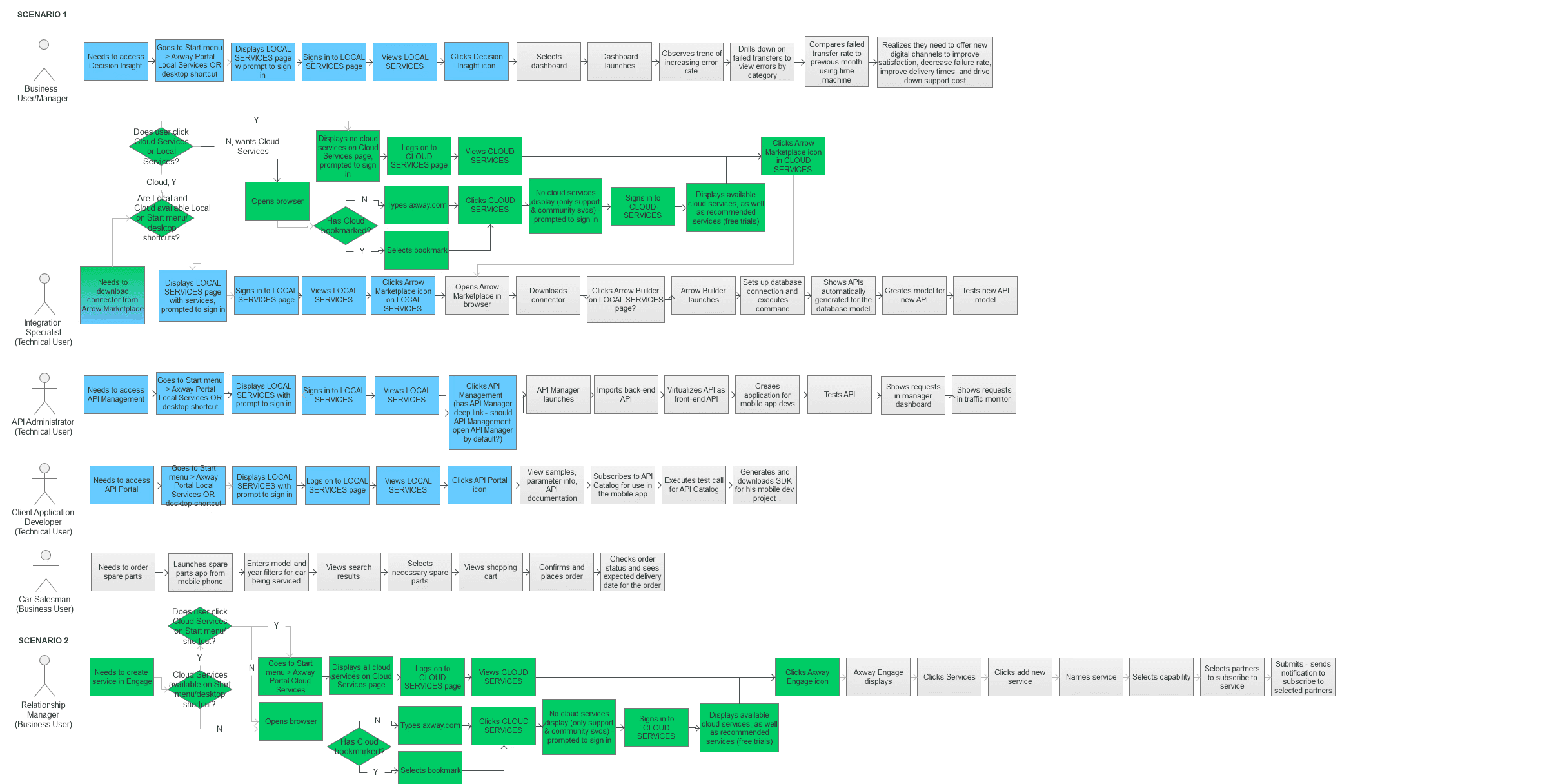
Persona mapping
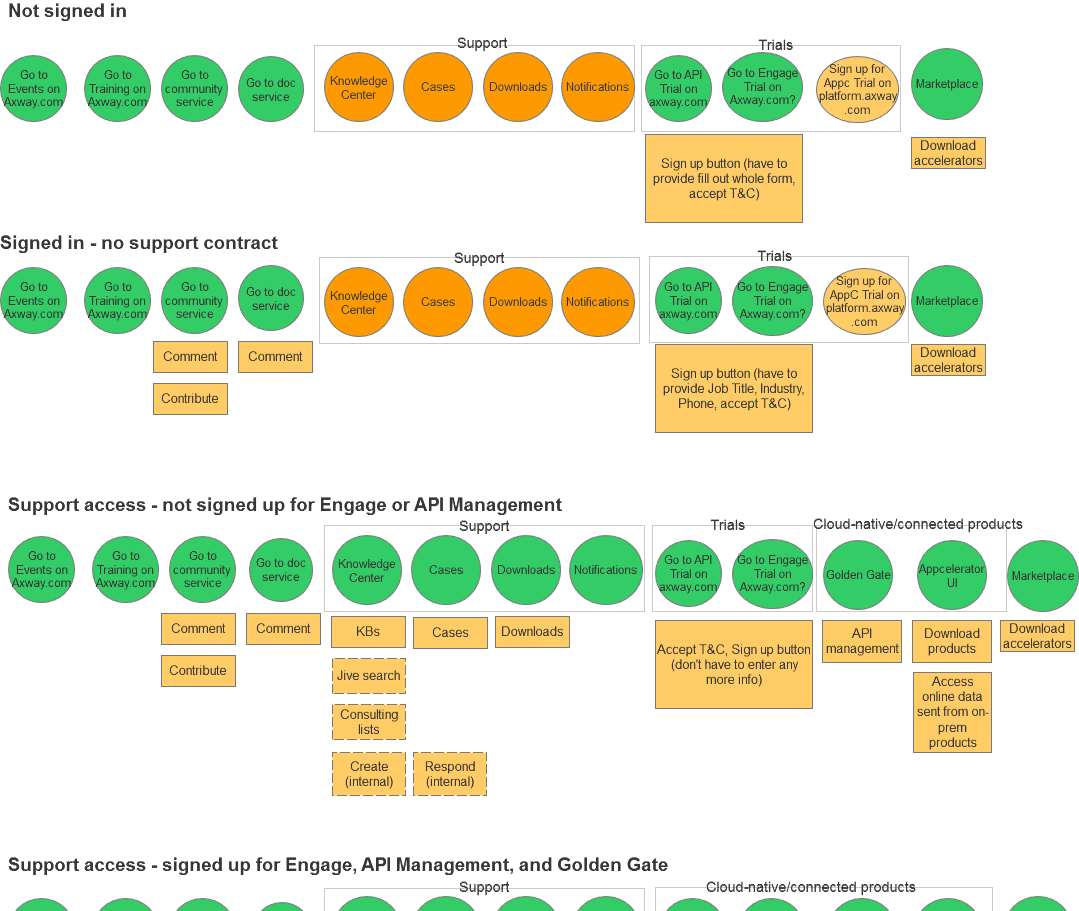
Permission mapping
Removing the mystery from navigation, I introduced the first mega-menus, complete with upsells and next steps.

Everything users need to access, as well as bringing our partner program forward.
Although single sign on is standard nowadays, at the time, our customers were juggling different credentials for products, support site, partner platform, etc.

The first mobile-friendly experience, particularly focused on support and self-service, as those use cases were most critical for mobile.

There was a lot more cool stuff in the pipeline, but this is what where we got, a giant leap forward for Axway customers everywhere!

